
 EN
EN

In today's competitive food distribution landscape, retailers and distributors face mounting pressure to reduce operational expenses while maintaining product quality and customer satisfaction. Frozen poultry has emerged as a strategic solution that addresses multiple cost drivers simultaneously, from inventory management to waste reduction. By understanding the financial advantages inherent in frozen poultry procurement and handling, food businesses can optimize their supply chain economics while delivering consistent value to their customers.
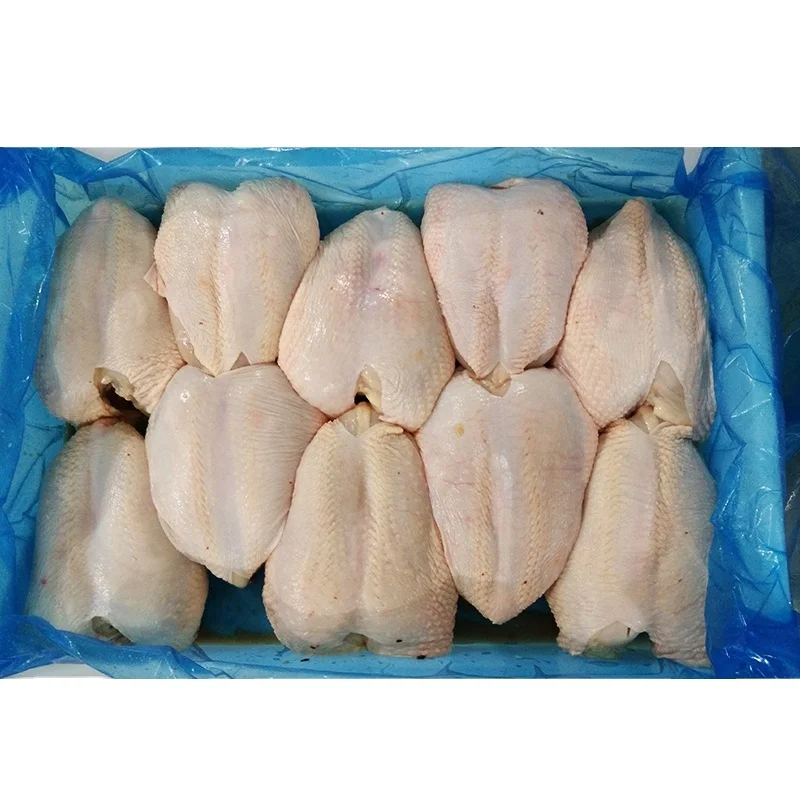
The financial benefits of frozen poultry extend far beyond simple purchase price considerations. When examined holistically, frozen poultry creates cost savings through extended shelf life, reduced spoilage rates, improved labor efficiency, optimized storage utilization, and enhanced purchasing flexibility. These cumulative advantages make frozen poultry an essential component of cost-effective food retail and distribution operations, particularly for businesses seeking to improve their bottom line without compromising product standards or customer experience.
Extended Shelf Life Reduces Inventory Turnover Costs
Minimizing Product Loss Through Longer Storage Windows
One of the most significant cost advantages of frozen poultry lies in its extended shelf life compared to fresh alternatives. While fresh poultry typically maintains optimal quality for only a few days, frozen poultry can remain in storage for months without quality degradation when properly maintained. This fundamental difference transforms inventory management economics for retailers and distributors by dramatically reducing the pressure to move product quickly or accept markdown losses.
The extended storage capacity of frozen poultry allows businesses to reduce the frequency of ordering cycles, which directly translates to lower administrative costs, fewer delivery charges, and reduced labor hours spent on receiving and inspection activities. Distributors can consolidate shipments more effectively, negotiating better freight rates through larger order volumes rather than frequent small deliveries that increase per-unit transportation costs.
Furthermore, the stability of frozen poultry inventory creates planning flexibility that fresh products cannot match. Retailers can stock up during promotional periods or when market prices dip, storing product economically until demand increases or prices rise. This strategic purchasing capability converts frozen poultry into a hedge against price volatility, enabling businesses to smooth out cost fluctuations that would otherwise compress profit margins during peak price periods.
Reducing Emergency Ordering and Premium Freight Expenses
The predictable shelf life of frozen poultry eliminates many emergency ordering situations that plague businesses handling fresh products. When fresh inventory unexpectedly depletes or spoils, retailers often must place rush orders that incur premium freight charges and may force acceptance of higher product costs due to limited supplier options. These crisis purchases can significantly inflate overall procurement costs.
With frozen poultry, businesses maintain reliable buffer stock that prevents stockout situations and the associated costs of lost sales, disappointed customers, and emergency replenishment. The ability to maintain adequate safety stock without spoilage risk means distributors can optimize their ordering schedules around the most economical freight options rather than urgency-driven decisions that compromise cost efficiency.
Additionally, frozen poultry enables businesses to participate in advance purchasing programs and forward contracts that typically offer better pricing than spot market purchases. The extended storage capability makes these longer-term commitments practical, whereas fresh product limitations would make such arrangements financially risky due to potential spoilage before the product could be sold.
Waste Reduction Directly Improves Profit Margins
Eliminating Spoilage-Related Financial Losses
Product spoilage represents one of the most insidious cost drains in food retail and distribution operations. With fresh poultry, spoilage rates can reach significant percentages depending on demand fluctuations, handling practices, and temperature control challenges. Every unit of spoiled product represents not only the lost wholesale cost but also the wasted labor, storage, and handling expenses invested in that inventory.
Frozen poultry virtually eliminates spoilage losses when proper frozen storage protocols are maintained. The freezing process suspends bacterial growth and enzymatic reactions that cause fresh product deterioration, creating a stable product that maintains quality throughout its storage period. For distributors handling large volumes, this spoilage prevention translates to substantial annual savings that directly enhance profitability.
The financial impact extends beyond direct product loss. Spoilage management requires labor for identification, removal, documentation, and disposal of compromised products. These activities consume employee time that could be directed toward value-adding activities. By minimizing spoilage incidents, frozen poultry allows businesses to redirect labor resources toward customer service, merchandising, and operational improvements that drive revenue rather than managing losses.
Reducing Markdown and Clearance Sale Requirements
Fresh poultry approaching its expiration date must typically be marked down significantly to clear inventory before spoilage occurs. These forced markdowns erode profit margins and train customers to wait for discounts rather than purchasing at full price. The markdown cycle becomes a predictable pattern that undermines pricing integrity and reduces overall revenue capture.
Frozen poultry eliminates the urgency driving these markdown decisions. Without imminent expiration pressures, retailers maintain pricing consistency and avoid the margin compression associated with clearance sales. This pricing stability supports better gross margin realization across the product category while maintaining customer perception of value without reliance on frequent promotional discounting.
For distributors, reduced markdown pressure means more predictable pricing to retail customers and fewer disputes over product dating or quality concerns. The stability of frozen poultry inventory creates cleaner financial transactions and reduces the administrative burden of processing credits, returns, or allowances related to product age or condition issues that commonly arise with fresh products.
Labor Efficiency Gains Through Simplified Handling
Streamlined Receiving and Quality Inspection Processes
The handling requirements for frozen poultry are considerably more straightforward than those for fresh products, translating to meaningful labor cost savings throughout the supply chain. Receiving frozen poultry primarily requires verification of proper frozen temperature maintenance and package integrity, whereas fresh poultry demands more extensive evaluation of color, odor, texture, and dating to assess quality and remaining shelf life.
This simplified inspection process reduces the time warehouse staff must spend on each receiving transaction, allowing the same labor force to handle greater product volumes or freeing up resources for other operational needs. For high-volume distributors processing multiple deliveries daily, these time savings accumulate into substantial labor cost reductions or capacity increases without proportional staffing increases.
The reduced complexity of frozen poultry handling also lowers training requirements for warehouse and retail staff. Employees can achieve competency in frozen product management more quickly than with fresh products, which require more nuanced judgment about quality assessment and rotation practices. This faster training cycle reduces onboarding costs and allows businesses to maintain operational effectiveness even with higher employee turnover rates common in the food retail sector.
Minimizing Stock Rotation Labor Requirements
Fresh poultry demands rigorous first-in-first-out rotation practices with frequent reorganization of storage areas to ensure older products move before newer arrivals. This continuous rotation activity consumes significant labor hours, particularly in retail environments where products must be reorganized multiple times daily to maintain proper dating sequences as customers select items.
While frozen poultry still benefits from proper rotation, the extended shelf life dramatically reduces rotation urgency and frequency. Staff can manage frozen poultry inventory with less intensive monitoring and fewer reorganization cycles, redirecting those labor hours toward customer-facing activities or other operational priorities. The reduced rotation burden is particularly valuable during peak business periods when labor resources are stretched and must be allocated to the highest-priority activities.
Furthermore, the stability of frozen poultry reduces the complexity of inventory management systems. Businesses can maintain simpler tracking protocols without the granular date monitoring required for fresh products, reducing both system costs and the labor required to maintain accurate inventory records. This operational simplification supports leaner staffing models while maintaining effective inventory control.
Optimized Storage Utilization and Facility Costs
Higher Density Storage Configurations
Frozen poultry products can be stacked and stored at higher densities than fresh alternatives due to their rigid frozen state and protective packaging. This physical characteristic allows warehouses and retailers to maximize cubic storage utilization, effectively increasing storage capacity within existing facilities without expansion costs. The ability to store more product per square foot directly reduces the per-unit facility cost allocation.
For distributors operating cold storage facilities, this density advantage is particularly valuable given the high construction and operating costs of refrigerated space. By maximizing frozen poultry storage density, businesses can defer facility expansion investments or reduce the total cold storage footprint required to support their distribution volumes. These capital cost savings or capacity increases represent significant economic advantages over fresh product handling models.
Retailers benefit similarly from frozen poultry's space efficiency. Backroom freezer capacity often represents a constraint on fresh product variety and inventory depth. Frozen poultry's superior storage density allows retailers to maintain broader assortments and deeper inventory positions within existing freezer space, supporting better in-stock rates and customer satisfaction without facility modifications.
Consolidated Temperature Zone Management
Managing multiple temperature zones for different product categories adds complexity and cost to food distribution and retail operations. Fresh poultry requires precise refrigeration typically in the 32-40°F range, while frozen poultry operates at 0°F or below. However, frozen storage allows consolidation with other frozen products, creating operational efficiencies through shared temperature management systems and simplified facility layouts.
The ability to co-locate frozen poultry with other frozen foods reduces the total number of temperature zones a facility must maintain, lowering energy costs, reducing equipment requirements, and simplifying temperature monitoring protocols. For multi-product distributors and retailers, this consolidation opportunity makes frozen poultry more economically attractive than adding fresh poultry capacity, which would require dedicated refrigeration infrastructure separate from both ambient and frozen zones.
Energy costs for frozen storage, while higher per cubic foot than refrigerated space, are offset by the ability to stock larger volumes per square foot and the reduced energy waste from fewer door openings and product movements required for frozen poultry compared to fresh products that must be rotated and inspected more frequently. The net energy cost per unit sold often favors frozen poultry when all factors are considered comprehensively.
Enhanced Purchasing Flexibility and Price Optimization
Volume Purchasing and Negotiating Power
The extended shelf life of frozen poultry enables businesses to commit to larger purchase quantities, which unlocks volume discounts and improved pricing terms from suppliers. Rather than being constrained by short-term storage limitations, distributors and retailers can negotiate contracts based on optimal purchase economics rather than weekly inventory turnover requirements that limit negotiating leverage.
This purchasing flexibility allows businesses to take advantage of market conditions such as seasonal production peaks when frozen poultry prices typically decline due to abundant supply. By purchasing larger quantities during these favorable periods and storing product economically until needed, businesses effectively arbitrage the seasonal price cycle, buying low and selling throughout the year at consistent margins rather than experiencing margin compression during high-price periods.
Additionally, frozen poultry's stability makes it practical to participate in promotional loading opportunities where suppliers offer temporary price reductions to drive volume. Fresh product limitations often prevent businesses from capitalizing on these promotions due to inability to store excess inventory, but frozen poultry allows full participation in such programs, capturing promotional savings that directly enhance gross margins on subsequent sales.
Geographic Sourcing Diversification
Frozen poultry enables businesses to source from a broader geographic range of suppliers compared to fresh products, which must originate from relatively nearby production facilities to maintain quality during transportation. This expanded sourcing flexibility creates competitive supplier dynamics that pressure pricing downward while improving supply reliability through multiple source options.
International sourcing becomes practical with frozen poultry in ways impossible with fresh products due to transportation time constraints. Businesses can evaluate global suppliers based purely on quality and cost competitiveness rather than being constrained to local or regional sources. This global marketplace access typically results in more favorable pricing, particularly for standard specifications where multiple international producers compete for business.
The ability to maintain multiple approved suppliers for frozen poultry also provides insurance against supply disruptions from individual sources. Rather than facing stock-out situations when a primary fresh supplier experiences production issues, frozen poultry buyers can maintain safety stock while transitioning volume to alternative sources, preventing both lost sales and the premium costs associated with emergency sourcing from unfamiliar suppliers during supply crises.
Frequently Asked Questions
What is the typical cost difference between frozen and fresh poultry for distributors?
The wholesale price of frozen poultry is generally 15-25% lower than comparable fresh products, though this varies by product specification, market conditions, and purchase volume. However, the total cost advantage extends beyond purchase price to include reduced spoilage losses typically 3-5% of fresh inventory, lower labor costs for handling and rotation, reduced emergency ordering expenses, and better freight consolidation opportunities. When all factors are considered comprehensively, frozen poultry typically delivers 25-35% total cost advantage compared to fresh alternatives for most distribution operations.
How does frozen poultry storage cost compare to refrigerated fresh product storage?
While frozen storage operates at lower temperatures requiring more energy per cubic foot than refrigerated storage, frozen poultry can be stored at significantly higher densities and for much longer periods, reducing the per-unit storage cost. Frozen poultry also requires less frequent handling and rotation, reducing labor costs associated with storage management. Most distributors find that total storage cost per unit sold favors frozen poultry despite higher energy requirements, particularly when factoring in the elimination of spoilage losses and markdown requirements that affect fresh product economics.
Can retailers maintain profit margins while offering competitive pricing on frozen poultry?
Yes, the cost advantages of frozen poultry enable retailers to maintain healthy profit margins while offering competitive consumer pricing. The combination of lower wholesale costs, virtually eliminated spoilage, reduced labor requirements, and no markdown pressure creates margin opportunities that exceed fresh poultry even at lower retail price points. Many retailers find frozen poultry generates higher absolute dollar profit per pound sold compared to fresh alternatives, while the lower retail price point drives higher unit velocity that further enhances total category profitability.
What operational changes are needed to maximize frozen poultry cost savings?
Maximizing frozen poultry cost benefits requires adequate freezer storage capacity to support volume purchasing and safety stock maintenance, purchasing systems that can evaluate total cost of ownership rather than just unit price, supplier relationships that enable volume commitments in exchange for favorable pricing, and staff training on proper frozen product handling to maintain quality throughout the distribution chain. Most businesses find these operational adaptations require minimal investment while delivering substantial ongoing cost savings that quickly justify any initial system or facility modifications needed to optimize frozen poultry handling.
Table of Contents
- Extended Shelf Life Reduces Inventory Turnover Costs
- Waste Reduction Directly Improves Profit Margins
- Labor Efficiency Gains Through Simplified Handling
- Optimized Storage Utilization and Facility Costs
- Enhanced Purchasing Flexibility and Price Optimization
-
Frequently Asked Questions
- What is the typical cost difference between frozen and fresh poultry for distributors?
- How does frozen poultry storage cost compare to refrigerated fresh product storage?
- Can retailers maintain profit margins while offering competitive pricing on frozen poultry?
- What operational changes are needed to maximize frozen poultry cost savings?